

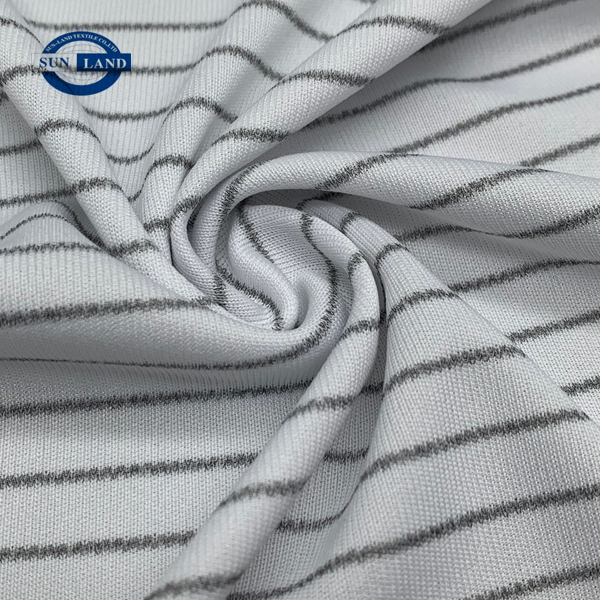
Everyone must be familiar with the mention of functional fiber fabrics, but different types of fabrics have their own characteristics and differences. Let me take you through the differences between different functional fiber fabrics!
1.
Flame-retardant polyester is a fiber with flame-retardant properties due to the phosphorus atoms contained in the polyester molecule. It is mainly used in hospitals, insurance, decorative fabrics and industrial fabrics; flame-retardant polypropylene fiber is processed through traditional processes or in Additives are added to the polymer formula to make polypropylene fiber obtain flame retardant properties. This product is mainly used for curtains, wall coverings and decorative cloths; melamine fiber is a new type of high-temperature resistant fiber, which is very flexible and has certain flame retardancy. , can be used in the field of fire protection.
2.Anti-static Fiber
By modifying synthetic fibers, that is, adding antistatic agents inside the polymer or introducing a third monomer, the fibers themselves have antistatic capabilities. The products are mainly used in civilian textiles such as carpets, curtains, work clothes in hospital operating rooms, and anti-fouling and anti-adhesive products.
3.Far Infrared Fiber
Ceramic powder is melted with polyester, polypropylene, viscose and other synthetic fibers before spinning. It can convert the absorbed solar energy into the heat energy needed by the human body, promote blood circulation, increase the blood and oxygen supply to the human body, and speed up metabolism. , improve the body's muscle energy. Products are mainly used in medical and health care fields
4.Anti-UV Fiber
Anti-UV fiber made of UV shielding agent through melt spinning, has a shielding rate of over 92% of UV rays, and has a certain shielding effect on thermal radiation. It is mainly used to make summer shirts, T-shirts and parasols, etc.+
5.Moisture Wicking Fiber
Moisture-absorbing and sweat-wicking fibers use the capillary phenomenon produced by the micro-grooves on the fiber surface to allow sweat to quickly migrate to the surface of the fabric and disperse through wicking, diffusion, transmission, etc., thereby achieving the purpose of moisture conduction and quick drying.
In addition, there are a variety of functional fiber fabrics such as high-temperature resistant fibers, high hygroscopic fibers, moisture-absorbing and
moisture-conducting functional fibers, thermal insulation and temperature-regulating fibers, shape memory smart fibers,
radiation-proof fibers,conductive and antistatic fibers, each of which has unique characteristics.
performance and application areas.
In general, functional fiber fabrics use special materials, processes and designs to improve and enhance fiber properties to
meet various specific needs. These fabrics not only improve the practicality and comfort of products,
but also provide more possibilities for textile innovation and development.